
If your head drifts in front of your shoulders, you’re not alone. Forward head posture sneaks up on desk workers, students, and anyone glued to a phone. It can feel like a constant tug in the neck, plus headaches and tight shoulders that won’t quit. The encouraging part is this: CBP Traction is designed to help bring the head back and rebuild a healthier neck curve. That’s a different goal than simply loosening tight muscles for a day or two.
Why forward head posture puts your neck under constant stress
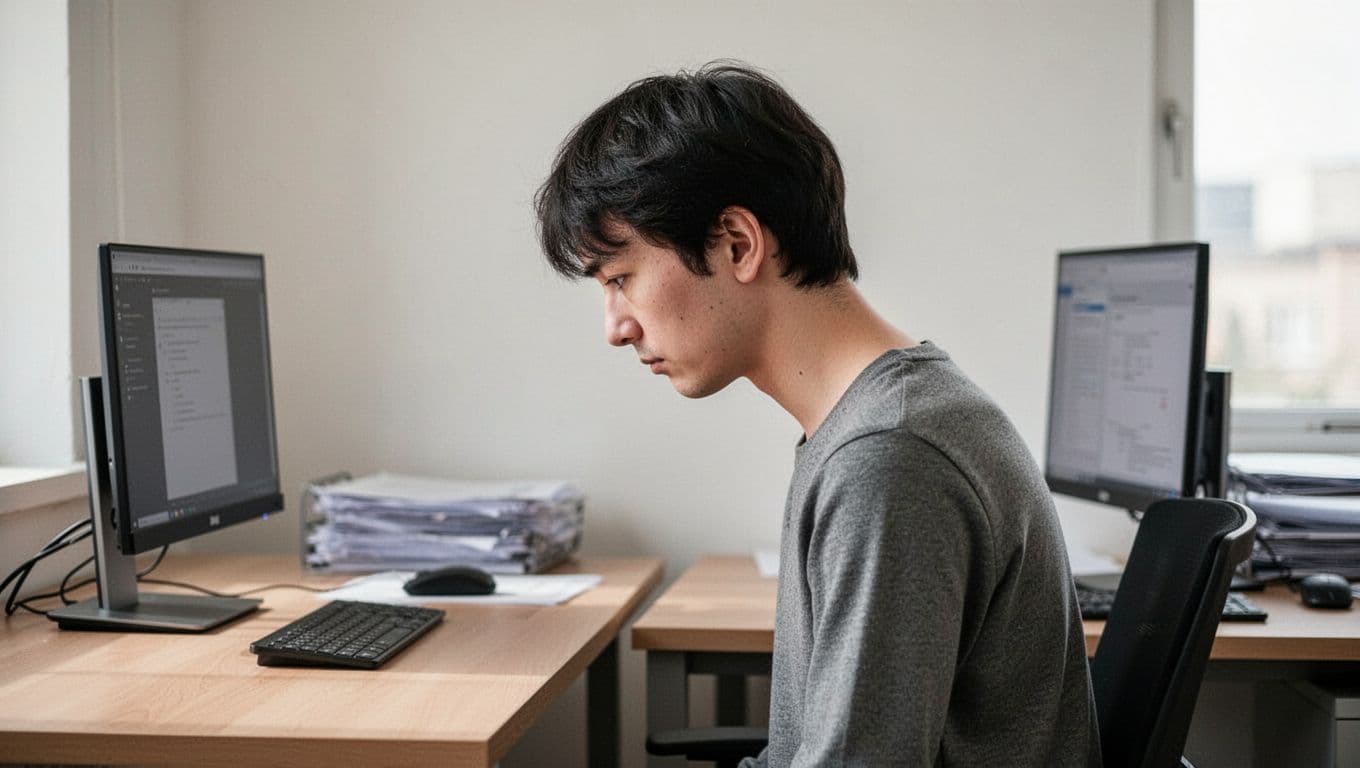 Forward head posture at a desk, showing how the head can sit ahead of the shoulders (created with AI).
Your head isn’t light. When it sits forward, your neck and upper back muscles have to hold it up all day. That extra “hold” adds up fast. Think about looking down at a phone, leaning toward a laptop, or craning forward while driving. The farther forward you go, the more your body braces.
As a result, you may notice neck pain, shoulder tension, headaches, and stiffness when turning your head. Some people also feel tingling into an arm, especially after long screen time. None of this means you’re broken. It often means your posture pattern keeps reloading the same stressed tissues.
If your posture keeps pulling your head forward, short-term relief often fades fast.
The posture pattern most people miss: a flattened neck curve
Your neck has a natural inward curve called cervical lordosis. When that curve flattens (or even reverses), forward head posture gets “locked in.” Stretching can feel good, but the pattern may return.
What CBP Traction does differently than stretching or basic adjustments
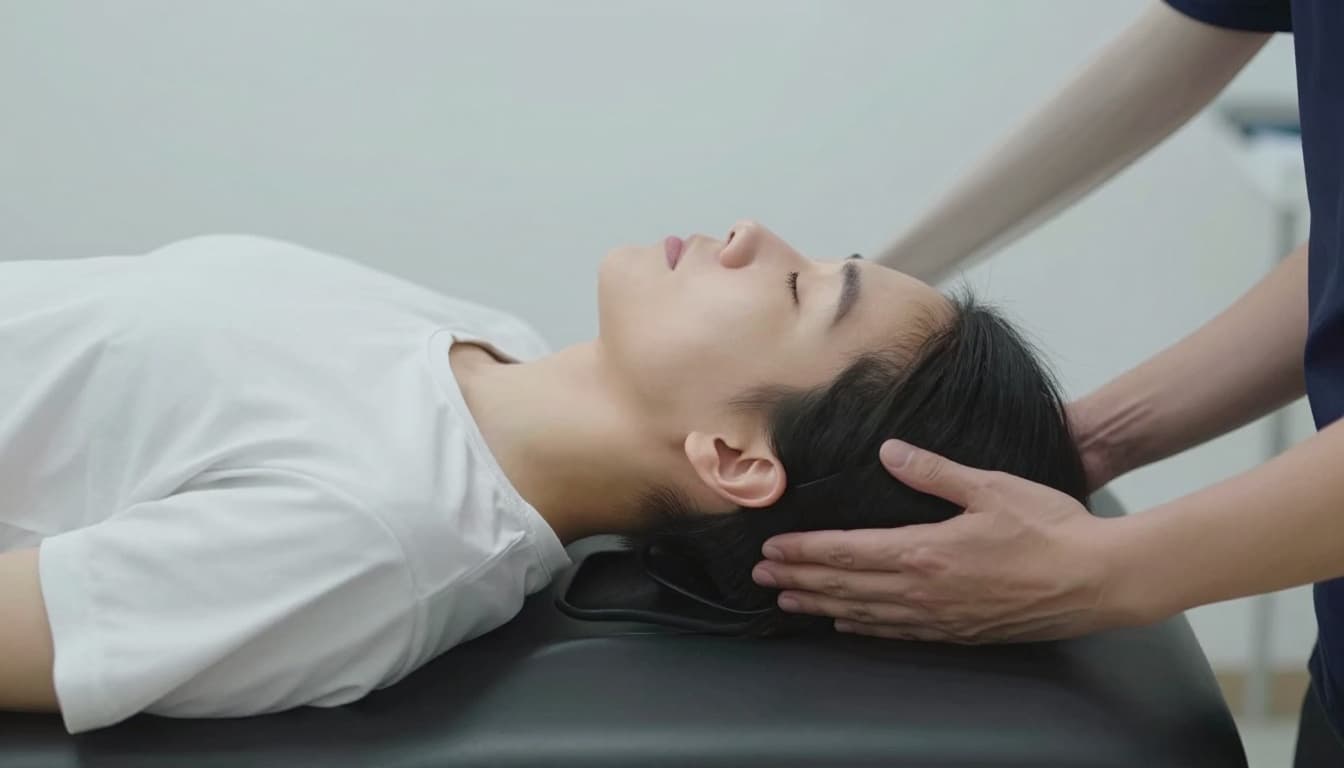 An example of a supported neck positioning setup used for extension-style traction (created with AI).
CBP Traction comes from Chiropractic BioPhysics, a posture-based approach. Instead of only “freeing up” a tight spot, it uses specific setups to guide the neck toward a better curve over time. In other words, it targets structure, not just soreness.
Most plans also pair traction with targeted adjustments and simple home work. That mix matters because posture is a daily habit, not a one-time event.
Extension traction: steady positioning that helps the neck relearn its curve
Extension traction uses gentle, sustained positioning, often around 10 to 20 minutes. With repeated sessions, your body can adapt to that new shape. It’s typically a weeks-long plan, not a one-visit fix.
Mirror-image training: practicing the opposite of your slouch
Mirror-image exercises teach the “opposite” posture: chin tucked slightly, head moving back over the shoulders. Because you practice it often, your brain starts choosing it automatically.
What results you can realistically expect, and how to make them last
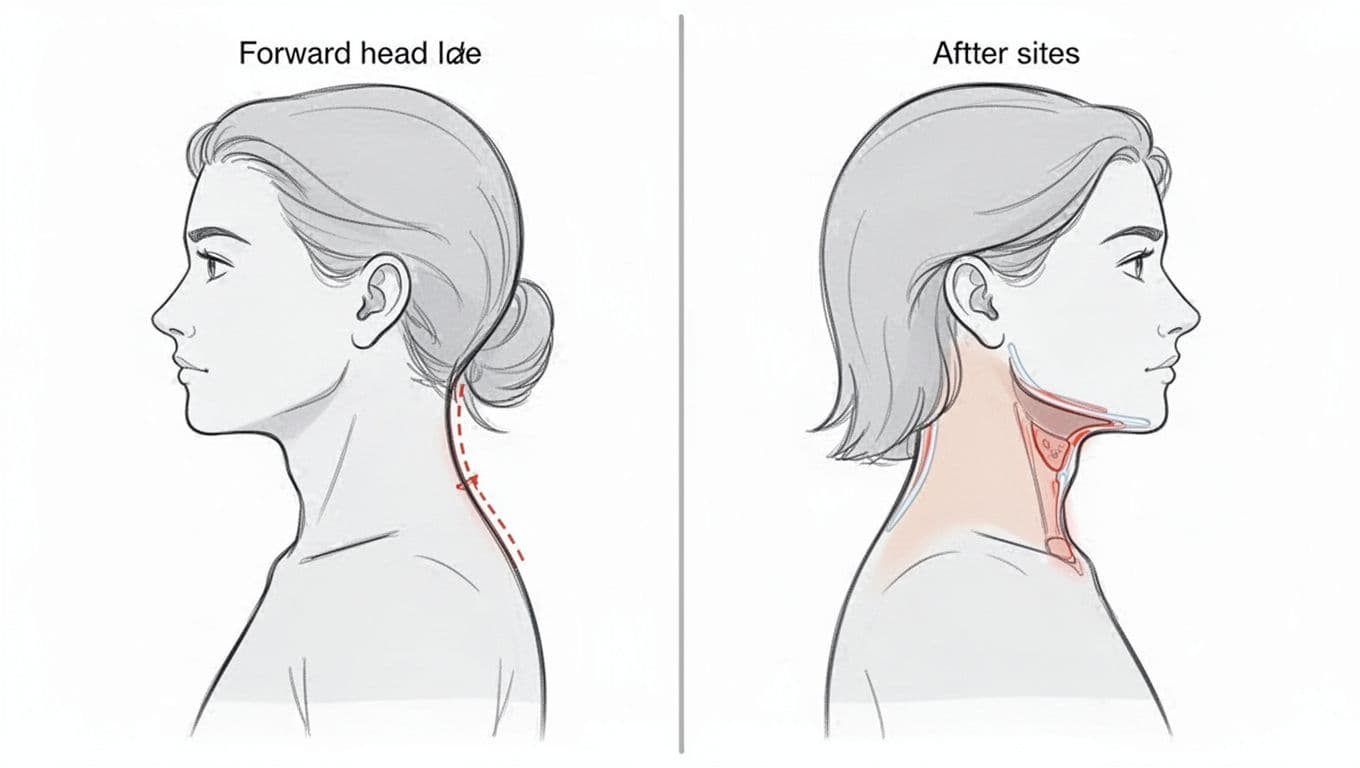 Simple before-and-after posture comparison, showing the head moving back over the shoulders (created with AI).
Studies on CBP-style extension traction report measurable changes in head position and neck curve. Many people also report less pain and better daily function as posture improves. That said, results depend on consistency and how long the pattern has been there.
It also helps to know this: decompression traction and CBP Traction are related but not identical. Decompression often aims to reduce pressure and ease symptoms. CBP traction focuses more on restoring the neck’s curve and head position.
To support progress at home, raise screens closer to eye level, take brief movement breaks every hour, and use a pillow that keeps your neck neutral.
Who tends to do well with CBP Traction, and who needs extra caution
People with posture-driven neck pain and long-term screen habits often respond well. However, recent fractures, severe osteoporosis, or certain instabilities may need modifications. A proper exam, and sometimes X-rays or posture measurements, helps guide safe care.
Conclusion
Forward head posture can feel like carrying a bowling ball out in front of your body. CBP Traction works to pull the head back and rebuild the neck curve, which can calm strain and help symptoms settle. The best next step is a real posture and curve evaluation, then a plan you can stick with. Pair in-office care with better daily habits, and the changes can last.